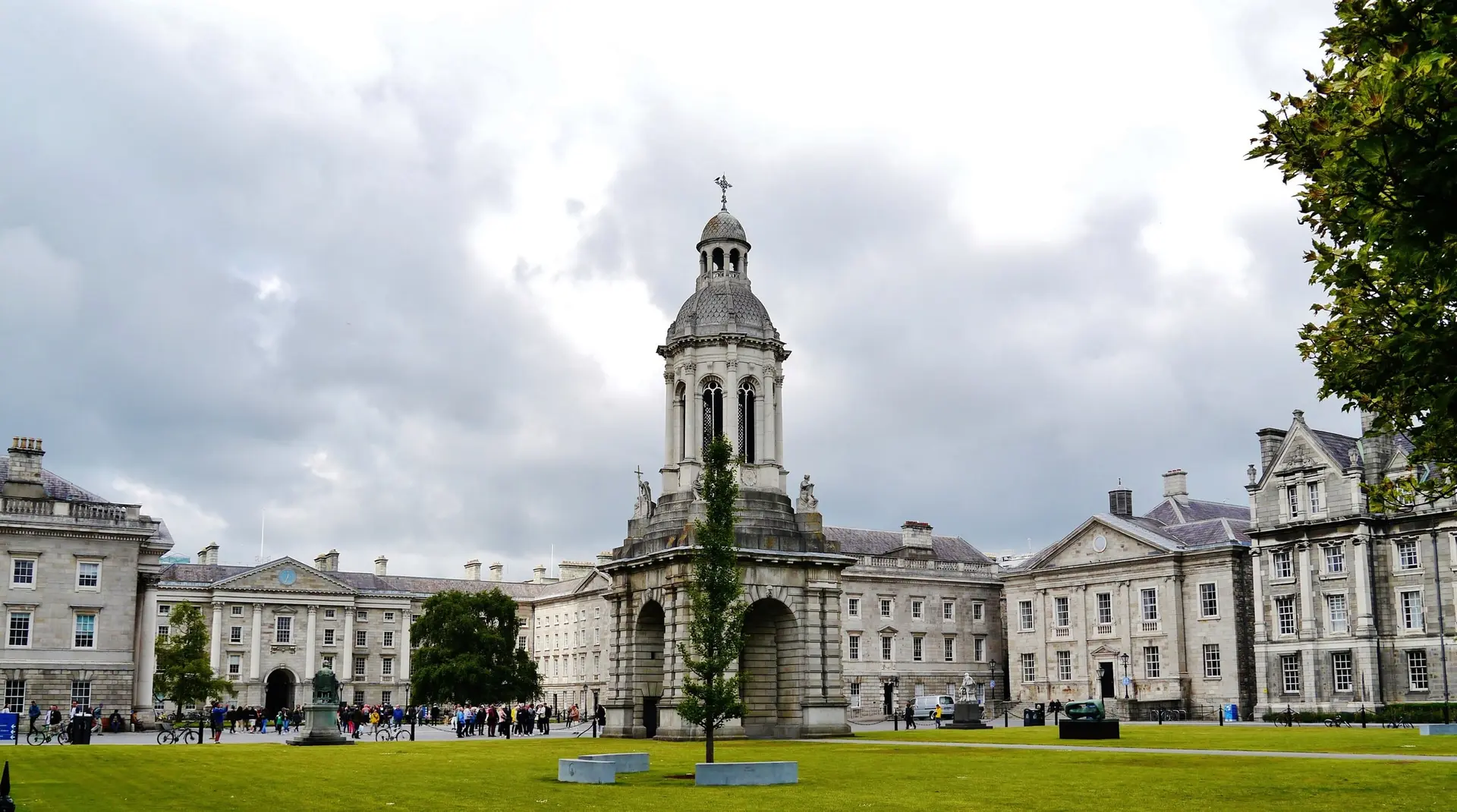
Photo: Campanile, Trinity College Dublin by Zairon, CC BY 4.0 (edited)
Your Global Education Journey Starts Here
Explore your study options in Ireland with personalised guidance from UniAbroadly. From choosing the right course and university to preparing applications, understanding visa requirements, and planning your finances, we support you at every stage of your international education journey.
Ireland combines a well-established higher education system with a welcoming, English-speaking environment and strong connections to international industries. Students can explore programmes in technology, business, engineering, healthcare, science, finance, and many other fields.
Irish universities and colleges offer opportunities for academic learning, research, and practical skill development. Studying in Ireland can also help you experience a new culture, build international connections, and prepare for your future career.
Your best-fit destination will depend on your academic background, chosen course, budget, and career plans. UniAbroadly can help you compare options and make informed decisions.
Scholarships, employment, graduate permission, and future immigration options depend on individual eligibility. None is guaranteed.
UniAbroadly can help you navigate your study abroad journey with:
Many Irish institutions require evidence of English language proficiency. Depending on the programme, accepted tests may include IELTS Academic, TOEFL iBT, PTE Academic, or other approved alternatives.
Requirements and minimum scores vary by institution and course. We can help you identify the requirements for your shortlisted programmes and plan your next steps.
Ireland offers study options across a broad range of academic and professional areas. Popular subjects to explore include:
Course availability, entry criteria, and career pathways vary by institution and programme.
A bachelor's degree can provide a strong academic foundation and help you develop knowledge and practical skills in your chosen field. Many undergraduate programmes take approximately three to four years, although duration depends on the course and institution.
When choosing a programme, consider academic prerequisites, tuition fees, location, course structure, and opportunities for practical learning.
How UniAbroadly can help: We can help you compare programmes, understand entry requirements, prepare application documents, and track deadlines.
Ireland offers master's programmes in fields such as technology, business, engineering, science, finance, and healthcare. Many taught master's programmes take around one year, while others may take longer depending on their structure and research requirements.
Entry requirements may include a relevant bachelor's degree, English language proficiency, academic references, work experience, or a portfolio, depending on the programme.
How UniAbroadly can help: We can help you shortlist relevant programmes, review entry criteria, organise your application, and explore possible funding options.
An MBA may be suitable for students seeking to develop skills in business strategy, leadership, finance, marketing, operations, or entrepreneurship. Irish institutions offer different programme formats, and some may require prior professional experience.
Compare the curriculum, total fees, programme duration, entry requirements, and career services before making a decision.
How UniAbroadly can help: We can help you research business schools, understand their admission criteria, prepare your application, and explore funding opportunities.
Ireland offers doctoral study and research opportunities across disciplines including science, engineering, technology, business, humanities, and healthcare.
Applicants may need a relevant postgraduate qualification, research proposal, academic references, and evidence of research experience. Some research opportunities offer funding or stipends, subject to eligibility and availability.
How UniAbroadly can help: We can help you research suitable programmes, understand application requirements, and organise supporting documents.
When comparing institutions, consider programme content, academic entry requirements, location, tuition fees, research opportunities, and student support services.
Some Irish institutions you may wish to explore include:
This is an illustrative list, not a ranking or a statement of UniAbroadly's partnership status. Programme availability and entry requirements should be confirmed directly with each institution.
Admission requirements vary by institution, qualification level, and programme. Depending on your chosen course, you may need:
Some programmes have additional requirements. Always review the official course page before applying.
Your study budget will depend on the institution, course, city, accommodation, and lifestyle. Tuition fees can differ significantly between programmes, especially in specialised fields.
Include the following in your financial plan:
Living costs can vary considerably between cities and accommodation types. Research your intended location before deciding on a budget. Check the latest tuition information with your chosen institution and the official Education in Ireland website.
Official resource: https://www.educationinireland.com/en/plan-your-study-abroad(opens in a new tab)
Scholarships and funding opportunities may be offered by Irish universities, colleges, government programmes, research departments, and external organisations.
Depending on the award, eligibility may be based on academic performance, programme, nationality, research area, or other criteria. Some awards reduce tuition fees, while others may provide a stipend or additional financial support.
Scholarships are competitive, and availability varies. UniAbroadly can help you research suitable opportunities, review eligibility criteria, and understand application deadlines.
Planning your finances early can help you understand how to fund your studies abroad. Depending on your circumstances, you may explore education loans from eligible banks or financial institutions, alongside savings, family funding, or scholarships.
UniAbroadly can help you understand common loan documentation requirements and prepare for discussions with potential lenders. Loan approval, interest rates, collateral requirements, and disbursement timelines are decided by the lender.
International students must meet the relevant Irish immigration requirements for their nationality, course, and intended duration of stay. Depending on your circumstances, the process may involve an entry visa, evidence of admission, proof of finances, private medical insurance, and registration of immigration permission after arrival.
Requirements can change, so use official Irish immigration guidance when preparing your application.
UniAbroadly can help you organise documents, understand the process, and prepare your application. Visa decisions remain with the relevant authorities and cannot be guaranteed.
Official resources:
Eligible non-EEA students holding the appropriate Stamp 2 immigration permission and meeting the relevant course conditions may generally work:
These permissions are subject to current Irish immigration rules and individual eligibility. Students should not rely on part-time earnings as their primary way to demonstrate that they can fund their studies. Official guidance from Education in Ireland(opens in a new tab)
Eligible graduates may be able to apply under Ireland's Third Level Graduate Programme, which provides a period of immigration permission to seek graduate-level employment.
Under the published scheme, eligible graduates with a Level 8 award may qualify for up to 12 months, while eligible graduates with a Level 9 or higher award may qualify for up to 24 months, subject to the applicable conditions and renewals. Official Irish immigration guidance(opens in a new tab)
This permission does not guarantee a job, a further employment permit, or permanent residence. Graduates wishing to remain longer must meet the requirements of the relevant immigration route.
We review your academic background, interests, budget, and future plans to help you explore suitable study options.
We help you compare programmes based on your interests, academic eligibility, course content, duration, and goals.
We help you research institutions according to course availability, admission criteria, location, tuition fees, and your preferences.
We guide you in preparing an authentic Statement of Purpose and understanding recommendation requirements. Your personal statement should reflect your own experiences and goals, while referees should write their own recommendations.
We help you understand application forms, supporting documents, submission procedures, and deadlines for your chosen institutions.
Where an interview is required, we can help you practise discussing your academic background, course choice, and future plans clearly.
We help you track application updates and understand requests for additional information or documents from institutions.
We help you research potential scholarships, review eligibility criteria, and understand application requirements.
We help you understand common education loan requirements and organise documents to discuss with potential lenders.
We help you organise supporting documents and understand the application process using official guidance. Immigration decisions remain with the relevant authorities.
If an interview or additional clarification is required, we can help you prepare to explain your study plans and supporting information truthfully.
We can help you plan practical next steps, research accommodation options, and prepare for your move to Ireland.
Ireland offers an English-speaking learning environment, a broad range of academic programmes, and opportunities to explore research and industry connections. Your choice should depend on your course, budget, and goals.
Many higher education programmes are taught in English. However, language requirements vary by course, so check the details with your chosen institution.
Eligible students with the appropriate Stamp 2 permission may generally work up to 20 hours per week during term time and up to 40 hours during specified holiday periods.
Yes, some institutions and organisations offer scholarships and other funding. Eligibility, value, and availability vary.
Eligible graduates may qualify for the Third Level Graduate Programme. The permitted period depends on the qualification and the applicable immigration conditions.
No. Studying in Ireland does not guarantee permanent residence. Any future immigration application must meet the requirements of the relevant route.
Costs depend on your course, institution, location, and lifestyle. Check current tuition fees with your chosen institution and budget separately for accommodation and daily expenses.
No. Institutions decide admissions, and immigration authorities decide visa and residence applications. UniAbroadly can provide guidance and application support but cannot guarantee an outcome.
Choosing the right course and institution is an important step towards your future. Let UniAbroadly help you explore study options, understand the application process, and prepare for your international education journey.
Get personalised guidance for your Ireland study plans.
Explore your options. Make informed decisions. Take the next step towards your global education journey.