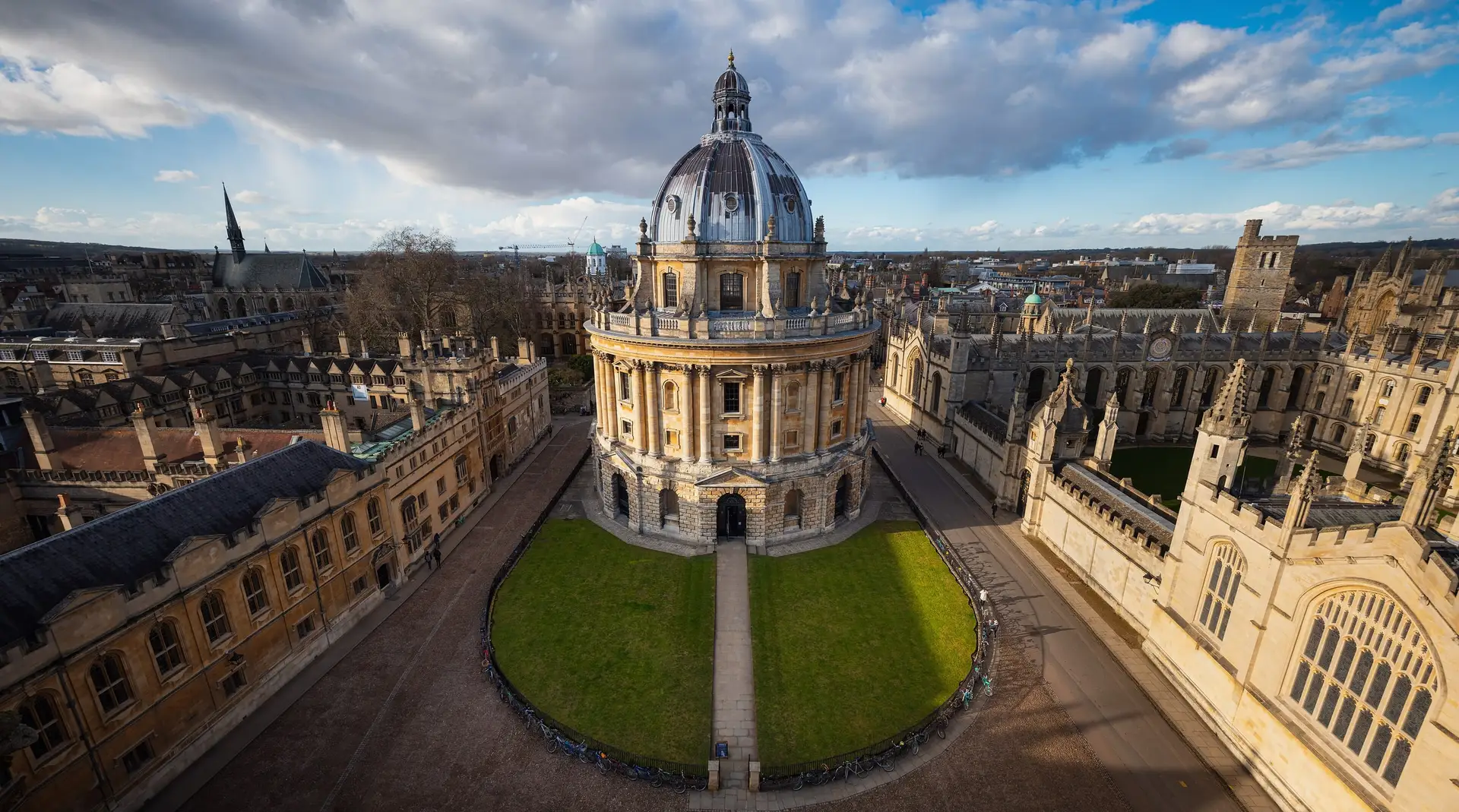
Photo: Radcliffe Camera, University of Oxford by Julian Herzog, CC BY 4.0 (edited)
Your UK Education Journey Starts Here
The United Kingdom is a popular destination for international students, offering a wide range of undergraduate, postgraduate, and research programmes. UK universities are known for their academic standards, research opportunities, specialised courses, and diverse learning environments.
From business and management to engineering, healthcare, computer science, law, and creative studies, students can explore programmes that align with their interests and future career goals.
At UniAbroadly, we help you navigate your study abroad journey, from selecting the right course and university to preparing your applications, exploring education funding, and understanding the student visa process.
Studying in the UK offers students the opportunity to gain an internationally recognised qualification while experiencing a diverse academic and cultural environment. Universities offer programmes across a broad range of disciplines, with opportunities for research, practical learning, and specialised study.
Many courses allow students to focus on their chosen field and develop subject-specific knowledge. The UK also offers a multicultural student community, university support services, and opportunities to explore professional interests during and after their studies, subject to the applicable rules.
Choosing the right institution requires careful consideration of course content, entry requirements, tuition fees, location, and career objectives. UniAbroadly helps you compare your options and make informed decisions.
Understand your academic profile, preferences, budget, and future goals before choosing a study pathway.
Explore programmes that match your qualifications, interests, and career aspirations.
Compare universities based on course content, eligibility, tuition fees, location, and student support.
Get guidance on application forms, academic documents, personal statements, and deadlines.
Explore available scholarships and understand the relevant eligibility requirements.
Learn about education loan options and the documentation lenders may require.
Understand the UK Student visa application process and prepare the relevant documents.
Plan your travel, explore accommodation options, and prepare for student life in the UK.
The UK offers a variety of programmes at undergraduate, postgraduate, and doctoral levels. Your options will depend on your academic background, chosen university, and course requirements.
Popular fields include:
A bachelor's degree in the UK commonly takes three years in England, Wales, and Northern Ireland, although some courses take longer. In Scotland, many undergraduate honours degrees typically take four years.
Students can choose from programmes in business, engineering, computer science, healthcare, arts, social sciences, and other disciplines. Some courses include placements, practical projects, or opportunities for further specialisation.
Admission requirements vary by institution and programme. They may include school-leaving qualifications, academic transcripts, English-language proficiency, a personal statement, and additional subject-specific requirements.
When planning your budget, consider tuition fees, accommodation, food, transport, insurance where applicable, and other living expenses.
UniAbroadly can help you explore bachelor's programmes and understand the requirements of your preferred universities.
A master's degree in the UK is an option for students looking to develop advanced knowledge or specialise in a chosen field. Many taught master's programmes take one year of full-time study, while others may take longer depending on the subject and course structure.
Popular options include computer science, business analytics, finance, engineering, public health, data science, marketing, and management.
Universities may require a relevant bachelor's degree, academic transcripts, proof of English-language proficiency, a personal statement, references, or work experience for certain programmes.
Before selecting a course, compare the curriculum, programme duration, fees, admission criteria, and available practical or research opportunities.
UniAbroadly can help you shortlist suitable master's programmes based on your profile and goals.
An MBA can help students build knowledge in leadership, strategy, finance, marketing, operations, and business management. UK business schools offer different programme formats, including full-time, part-time, and executive options.
Admission requirements vary. Some programmes expect applicants to have professional work experience, while others may consider candidates with different backgrounds. Applicants may also need academic records, a CV, references, essays, and English-language test results.
When comparing MBA programmes, consider the curriculum, class profile, duration, tuition fees, location, and your professional goals.
UniAbroadly can guide you in researching MBA programmes and understanding their entry requirements.
A PhD in the UK gives students the opportunity to conduct independent research and contribute to knowledge in a specialised field. Research opportunities are available across disciplines such as engineering, computer science, business, healthcare, science, and the humanities.
A full-time PhD commonly takes around three to four years, although the duration varies by university, research area, and individual progress.
Applicants may need relevant academic qualifications, a research proposal, academic references, a CV, and evidence of English-language proficiency. Some departments also require applicants to identify a suitable supervisor.
Certain universities and research programmes offer scholarships, studentships, or other funding opportunities to eligible applicants. Availability and conditions vary.
UniAbroadly can help you explore research programmes and understand the application process.
The UK has universities offering a wide range of academic disciplines, research opportunities, and learning environments. The right university for you depends on your chosen course, academic qualifications, budget, location preferences, and career plans.
Examples of UK universities students may research include:
This is a sample list, not a ranking or a statement of partnership with UniAbroadly. Course availability and entry requirements differ by university.
Our counsellors can help you compare institutions and identify suitable options for your academic profile.
The cost of studying in the UK depends on the university, course, study level, and location. Laboratory-based courses, clinical programmes, and other specialised degrees may have different fees from classroom-based programmes.
Your overall budget should include:
Living costs can differ considerably between London and other UK cities. Universities may publish estimated budgets to help students plan their finances.
Before applying, check the current fee information for your chosen course and calculate your expected living expenses.
UniAbroadly can help you compare study options according to your budget.
Living expenses depend on where you study, your accommodation, and your lifestyle. Students living in London may need a higher budget than students in some other parts of the UK.
Common expenses include:
When preparing your budget, consider both monthly expenses and one-time costs such as accommodation deposits, travel, and initial setup expenses.
Students applying for a visa must also meet the relevant financial evidence requirements. These requirements can change, so check the current official guidance before submitting an application.
Scholarships can help eligible international students manage the cost of studying in the UK. Funding may be available through universities, government programmes, charities, foundations, and other organisations.
Depending on the award, scholarships may be based on academic achievement, financial need, country of residence, chosen subject, research interests, or other criteria. Some provide partial tuition support, while others may cover a wider range of eligible expenses.
Scholarship applications can have separate deadlines and documentation requirements. Some awards require students to apply directly, while others may be linked to a university application.
UniAbroadly can help you research relevant scholarships, understand the eligibility criteria, and prepare the required documents.
Scholarships are competitive where applicable, and funding is not guaranteed.
Planning your finances is an important part of studying abroad. Education loans may help eligible students cover tuition fees and certain other education-related expenses.
Banks and financial institutions set their own eligibility criteria, interest rates, repayment terms, collateral requirements, and documentation rules. Approval depends on the lender's assessment of the applicant and the proposed study plan.
UniAbroadly can help you explore available education financing options, understand lender requirements, and prepare for the application process.
We encourage students and families to review loan terms carefully, including repayment obligations and any applicable fees, before making a decision.
International students generally need to meet the requirements for a UK Student visa before travelling to begin an eligible course. The process commonly involves receiving an offer from an appropriately licensed student sponsor, obtaining a Confirmation of Acceptance for Studies (CAS), demonstrating the required financial evidence, and meeting applicable English-language requirements.
Depending on your circumstances, additional documents or checks may be required. The timing of your application is also important.
UniAbroadly can help you understand the process, organise the required documents, and prepare your application carefully.
Visa decisions are made by UK immigration authorities. No consultancy can guarantee a visa outcome.
Some international students can work while studying, subject to their visa conditions and the type and level of course they undertake.
For eligible students studying full-time at degree level or above with an appropriately qualifying higher education provider, the usual limit is up to 20 hours per week during term time. Different conditions may apply to other courses and institutions. The permitted hours and conditions stated on the student's immigration permission must always be followed.
Students should check their visa conditions and university guidance before accepting a job. Student visa holders are also restricted from certain types of work, including self-employment.
Part-time employment may offer workplace experience and additional income, but it should not be relied on as the only way to fund tuition fees or meet visa financial requirements.
Eligible international graduates may be able to apply for the UK Graduate visa after successfully completing an eligible course and meeting the relevant requirements.
Under current rules, eligible bachelor's and master's graduates who apply for the Graduate visa on or before 31 December 2026 can receive permission for two years. Applications made on or after 1 January 2027 receive 18 months. Eligible PhD and other doctoral graduates can receive three years.
Applicants must meet the eligibility criteria and apply from within the UK before their Student visa expires. The Graduate visa cannot be extended, although some graduates may qualify to switch to another immigration route.
Immigration rules can change, and eligibility is not automatic. Check the latest official UK government guidance when planning your studies.
UniAbroadly can help you understand where to find official information about post-study options.
Our aim is to make the study abroad process easier to understand by providing guidance at each important stage.
We review your academic background, qualifications, interests, and study goals to help identify suitable pathways.
We help you explore programmes aligned with your interests, qualifications, and future ambitions.
We help you compare universities based on course content, eligibility, tuition fees, location, and other relevant factors.
We guide you in preparing a genuine statement of purpose and organising recommendation letters that reflect your actual academic or professional experience. Referees should write or approve their own recommendations.
We help you understand application forms, supporting documents, deadlines, and submission requirements.
Where interviews are required, we can help you practise communicating your motivations, experience, and course knowledge.
We help you monitor application progress and understand requests for additional information from institutions.
We help you research relevant scholarship opportunities and understand their eligibility and application requirements.
We help you explore education financing options and prepare the information lenders may request.
We guide you through the student visa documentation and application process based on the applicable requirements.
If an interview is required, we can help you prepare to explain your study plans and circumstances clearly and truthfully.
We help you plan practical arrangements for your move, including researching travel and accommodation options.
Requirements depend on your chosen course and institution. They may include academic certificates, transcripts, English-language evidence, a personal statement, references, and other supporting documents. Student visa applicants must also meet the applicable immigration requirements.
Not in every case. English-language requirements vary by university and course. Some institutions may accept alternative tests or other evidence of English proficiency, subject to their policies and visa requirements.
Many bachelor's degrees in England, Wales, and Northern Ireland take three years, while many taught master's degrees take one year. Some courses take longer, and undergraduate degrees in Scotland commonly take four years.
The cost depends on your course, university, city, and lifestyle. You should calculate tuition fees, accommodation, food, transport, visa-related expenses, and other living costs before deciding on your budget.
Yes, eligible international students can apply for scholarships offered by universities and other funding organisations. Availability, award amounts, deadlines, and eligibility requirements vary.
You may be eligible for an education loan through a bank or financial institution. Approval and loan conditions depend on the lender's assessment, your financial circumstances, and the proposed course.
Some students can work within the limits stated in their immigration permission. The permitted hours depend on the course, institution, and visa conditions. Always check your individual conditions before starting work.
Eligible graduates may qualify for the Graduate visa or another immigration route. The eligibility criteria and length of permission depend on the route and the rules in force when you apply.
Many undergraduate programmes do not require work experience. Requirements for postgraduate courses vary, and some programmes—particularly certain MBA courses—may expect professional experience.
No. Universities make admission decisions, and UK immigration authorities decide visa applications. UniAbroadly provides guidance to help you understand requirements and prepare your applications.
Your international education journey begins with choosing the right course, university, and plan.
Whether you are exploring a bachelor's degree, master's programme, MBA, or PhD, UniAbroadly can help you understand your options and take the next step with confidence.
Get personalised guidance for your UK study plans.